
Open Office vs Private Office: Which Design Actually Works Better

Open Office vs Private Office — AI Associates

Quick answer

Are open offices better than private offices?

Neither is universally better. Open offices foster collaboration and cost efficiency but research shows productivity declines 15-20% and face-to-face interaction drops 70% due to noise. Private offices enable 20-30% focus gains but cost more space. A hybrid, activity-based design typically delivers the best results.

Key Takeaways

  • A Harvard 2018 study found face-to-face interaction dropped 70% after companies moved to open offices.
  • Private offices enable 20-30% productivity gains on focused tasks but require costly square footage and reduce collaboration.
  • Activity-based hybrid designs offering varied spaces achieve the highest satisfaction and productivity scores.

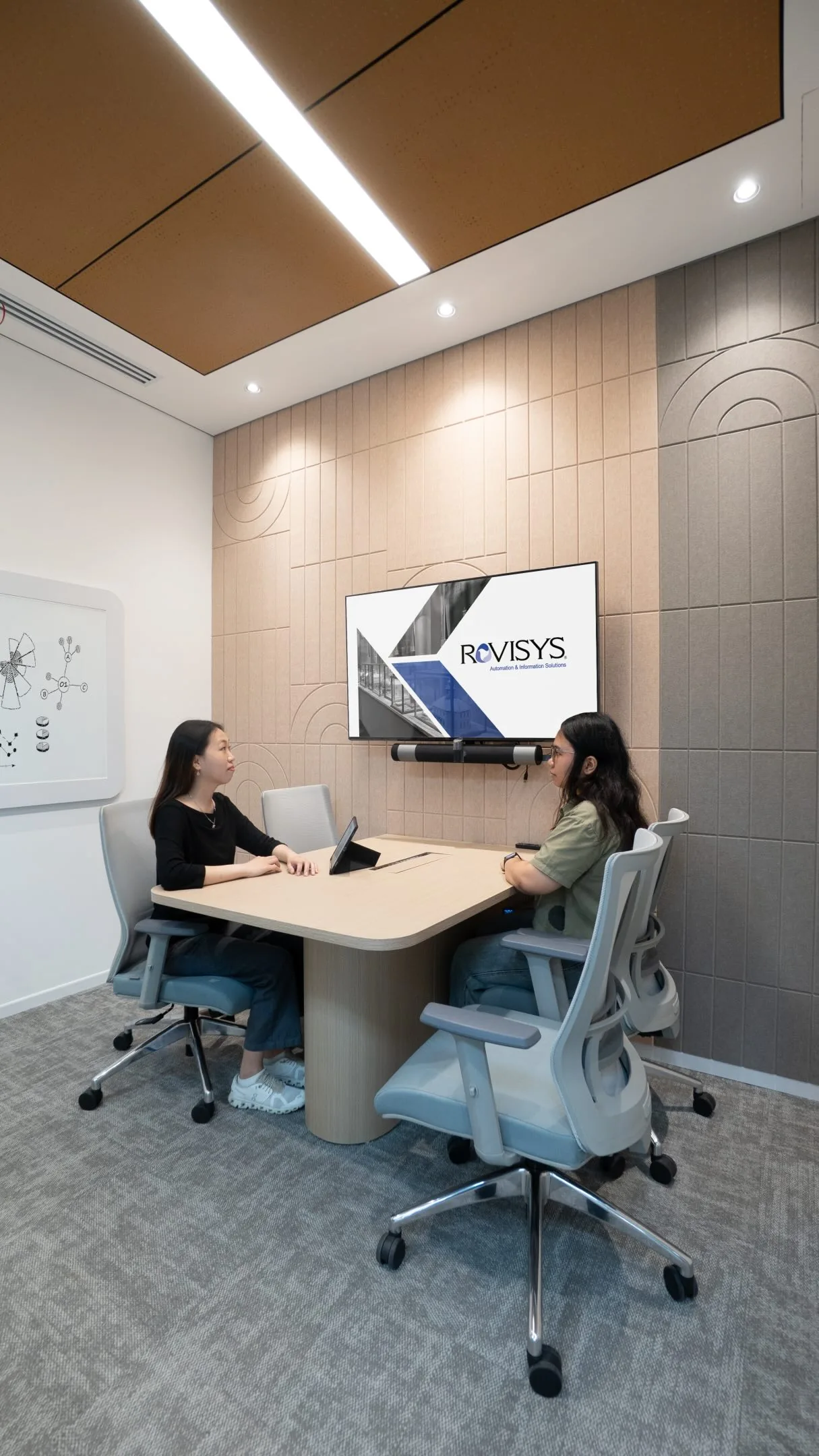
The Great Office Design Debate

Few workplace topics generate more passionate debate than open office versus private office design. Proponents of open offices claim they foster collaboration, transparency, and efficiency. Advocates for private offices argue they enable focus, privacy, and productivity. Both sides cite research supporting their position. So which design actually works better? After 23 years designing both open and private office layouts across hundreds of projects in Singapore, Malaysia, and Indonesia, we've learned the answer is more nuanced than either/or—and understanding when each approach works is critical to workplace success.

Understanding Open Office Design

Open office design eliminates or minimizes walls and partitions, creating shared workspace where many employees work in common area with limited physical separation. Characteristics include minimal private offices (typically only for senior leadership), shared work tables or bench seating, low or no partitions between desks, open sightlines across space, and shared amenity and meeting spaces. Open offices emerged in 1950s Germany as "Bürolandschaft" (office landscape), gained popularity in tech industry (Silicon Valley startups), peaked around 2010-2015 as dominant trend, and faced backlash in late 2010s when problems emerged.

Understanding Private Office Design

Private office design provides enclosed, individual offices or cubicles with walls, creating physical and acoustic separation. Characteristics include enclosed offices with doors and full-height walls, cubicles with partial-height walls (5-6 feet), individual workstations with defined boundaries, visual and acoustic privacy, and hierarchical layout common (larger offices = senior positions). Dominated workplace design throughout 20th century, represented status and hierarchy, efficiency-focused through standardization, and still preferred in some industries and cultures today.

The Hybrid Approach: Best of Both Worlds

The emerging consensus isn't open vs. private but thoughtful combination—a "hybrid" or "activity-based" design providing diverse space types including open collaboration zones, private focus rooms and phone booths, semi-private team neighborhoods, flexible meeting spaces, and individual choice in work location based on task. This approach recognizes that different work requires different environments and people have different preferences and needs.

Research Evidence: What Data Actually Shows

- Increased collaboration and communication - Improved team cohesion and culture - Cost-efficiency (more people per square foot) - Transparency and accessibility to leadership - Flexibility and easy reconfiguration Harvard study (2018) found face-to-face interaction DECREASED 70% when companies moved to open offices (people used email/chat instead to avoid disturbing others). University of California research showed productivity declined 15-20% in open environments compared to private. Noise and distraction reported as #1 complaint in open offices consistently. However, *well-designed* open offices with acoustic management, diverse space types, and proper amenities can work successfully—problem is many aren't well-designed. - Enhanced focus and deep work capability - Acoustic privacy and confidentiality - Reduced stress and fatigue - Personal control over environment - Status signaling Private offices do enable better focus (studies confirm 20-30% productivity gains in focused tasks), reduce stress from constant surveillance/noise, and enable confidential conversations essential in many roles. However, excessive private offices can create silos, reduce spontaneous collaboration, reinforce rigid hierarchy, and waste space through inefficiency. Studies on activity-based workplaces (providing choice of settings) show highest satisfaction scores, productivity metrics matching or exceeding private offices, successful collaboration without open office drawbacks, and employee preference for variety and choice.

When Open Office Works Best

Open design succeeds when: - Highly collaborative work (frequent teamwork) - Creative industries requiring idea cross-pollination - Startup/tech culture valuing transparency - Flat organizational structures - Project-based work with shifting teams - Excellent acoustic management implemented - Abundant phone booths and quiet rooms available - Variety in workspace types provided - High-quality amenities compensating for density - Technology supporting seamless communication - Employees value community over privacy - Leadership models desired behaviors - Trust and respect around noise/distraction - Hiring specifically for open office compatibility Tech startup, 60 employees, iterative product development requiring constant collaboration. Open office with acoustic pods works brilliantly—team productivity increased 28%, recruitment improved dramatically, and costs 40% less than private alternative.

When Private Office Works Best

Private design succeeds when: - Focus-intensive work (writing, analysis, coding) - Confidentiality requirements (legal, medical, HR) - Client meetings requiring privacy - Traditional industries with established hierarchy - Individual contributor-heavy workforce - Employees value privacy and autonomy - Diverse neurodiversity needs (sensory sensitivities) - Professional services client expectations - Status and hierarchy culturally important - Trust built through demonstrated investment in people Law firm, 45 attorneys, confidential client work and focus-intensive document review. Private offices essential for functionality—attempting open office would violate confidentiality and destroy productivity. Higher real estate cost justified by work requirements.

The Problems with Pure Open Office

Why so many open offices fail: Hard surfaces everywhere, no sound absorption, constant noise and distraction, impossible phone calls, and exhausting cognitive load processing ambient noise. Constant surveillance feeling, inability to concentrate, no confidential conversations, personal calls impossible, and video calls disturbing everyone nearby. Increased sick days (research shows 62% more sick leave in open offices), rapid disease spread, and concerns heightened post-pandemic. Ignores individual differences, assumes everyone works same way, and disadvantages introverts and neurodivergent employees. Ironically, extreme openness reduces face-to-face conversation as people avoid disturbing others or use headphones creating isolation in crowd.

The Problems with Pure Private Office

Why all-private layouts create issues: Reduced spontaneous interaction, slower information flow, weakened team cohesion, and communication friction. Massive square footage required, high real estate costs, difficult growth accommodation, and inflexible configuration. Office size = status creates resentment, unequal access to natural light/views, and rigid organizational structures. Difficult to reconfigure as needs change, construction required for org changes, and slow adaptation to new work modes.

The Hybrid Solution: Activity-Based Working

Smart organizations provide spectrum of spaces: For teamwork, brainstorming, and social interaction Neighborhoods with lower partitions, team identity maintained Phone booths, quiet rooms, library-style areas Various sizes for different needs Cafés, break areas, wellness rooms

Regional and Cultural Considerations

High real estate costs favor efficiency, tech sector embraces open designs, government initiatives support flexible work, and sustainability emphasis drives compact layouts. More traditional business culture, hierarchy important in many industries, private offices still common in corporate/financial sectors, and younger companies adopting hybrid models. Hierarchical culture values status symbols, private offices expected for senior levels, emerging companies experimenting with open concepts, and hybrid approaches gaining traction. Cultural alignment matters enormously—imposing Silicon Valley open office on traditional Jakarta firm creates cultural friction.

Making the Right Choice for Your Organization

- What percentage is collaborative vs. individual? - How often are confidential conversations needed? - What tasks require deep focus? - How much flexibility needed? - Hierarchical or flat? - Value transparency or privacy? - Employee preferences surveyed? - Industry norms and expectations? - Real estate cost per sq ft? - Efficiency requirements? - Growth plans and timeline? - Value placed on workplace quality? - Existing architecture constraints? - Acoustic challenges? - Natural light distribution? - Flexibility of floorplate?

Transitioning Between Layouts

Changing from private to open (or vice versa) requires careful change management: Explain why, address concerns, involve employees in planning, and provide training on new environment. Test pilot areas, gather feedback, refine before full rollout. Don't go extreme—include variety from day one. Collect occupancy data, survey satisfaction regularly, make adjustments based on evidence.

Conclusion: There is No Universal Answer

The open office vs. private office debate has no single right answer—optimal solution depends on your specific work, culture, budget, and people. Most successful modern offices avoid extremes, creating hybrid environments offering choice, flexibility, and appropriateness for diverse work modes. The real question isn't "open or private" but "what combination of open, semi-open, and private spaces best supports our work and culture?" At AI Associates, we've designed award-winning offices across the spectrum—from mostly open tech company spaces to primarily private professional services firms—always tailored to client's specific needs rather than applying generic formulas. The right design for you probably includes elements of both—and understanding when each works is key to workplace success.

Frequently Asked Questions

Are open offices better than private offices?

Neither is universally better. Open offices foster collaboration and cost efficiency but research shows productivity declines 15-20% and face-to-face interaction drops 70% due to noise. Private offices enable 20-30% focus gains but cost more space. A hybrid, activity-based design typically delivers the best results.

Why do open offices fail?

Open offices fail mainly from poor acoustics, with hard surfaces, no sound absorption, and constant noise reported as the top complaint. They also create surveillance feelings, prevent confidential conversations, spread illness (62% more sick leave), and ignore individual differences, disadvantaging introverts and neurodivergent employees.

What is activity-based working in office design?

Activity-based working provides a spectrum of space types so employees choose settings matching their task. It includes open collaboration zones, private focus rooms and phone booths, semi-private team neighborhoods, and flexible meeting spaces. Studies show it achieves the highest satisfaction and productivity, recognizing different work needs different environments.

Follow us on @ai.associates_

A closer look at our work, people, and design process.

Our officesSingapore/Kuala Lumpur/Jakarta
We design and build experiences.
At AI Associates, we turn ideas into thoughtful spaces, driven by strategy and experience. Get in touch with us to begin your design journey.
Singapore
A I Associates Pte Ltd

2 Sims Close #07-02 Gemini @ Sims Singapore. 387298.

T: +65 6659 7688

Malaysia
A.I. Architectural Interior Associates Sdn Bhd.

Unit No. 20-03, Level 20, Menara MBMR, No. 1, Jalan Syed Putra, Kuala Lumpur, 58000, Malaysia.

T: +60 3 2302 2900

Indonesia
PT. Architectural Interiors Indonesia

PIFT 19th floor unit 03, Jl. Lingkar Puri Dalam Blok T-8, Puri Indah, Jakarta Barat, Indonesia. 11610.

T: +6221 2258 5558

Cambodia
AI Associates (Cambodia) Co.,Ltd

No. 724 ECC Building 18th Floor, Norodom Blvd, Sangkat Tonle Basak, Khan Chamkamorn, Phnom Penh, Cambodia.

T: +855 23 230 763

Vietnam
AI Associates Vietnam Company Limited

617 & 617A National Road 13, Town 3, Hiep Binh Phuoc Ward, Thu Duc City, Ho Chi Minh City, Vietnam

China
A I Associates (Shanghai) Co., Ltd

Rm5213, 5th floor, No.656 Guilin Road, Xuhui district Shanghai, China