
Quick answer
What are the business benefits of sustainable office design?
Sustainable office design reduces energy costs by 20-40%, improves cognitive function by 26%, and cuts sick building syndrome by 30-50%. Green-certified buildings command 7-15% rent premiums and 18% higher property values. It also attracts talent, since 76% of millennials and Gen Z weigh environmental commitments when choosing employers.
Key Takeaways
- 01Efficient sustainable buildings reduce operational expenses by 20-40% compared to conventional designs in tropical climates.
- 02Green buildings improve cognitive function by 26% and reduce sick building syndrome by 30-50%.
- 03Green-certified buildings command 7-15% rent premiums and show 18% higher property values.
As environmental, social, and governance (ESG) commitments transition from optional initiatives to business imperatives, sustainable office design has become a strategic priority for forward-thinking companies across Southeast Asia. Creating workspaces that minimize environmental impact while maximizing human wellbeing is no longer just about corporate responsibility—it's about competitive advantage.
This guide explores how multinational companies and regional leaders can implement sustainable design principles that satisfy ESG requirements, improve employee wellness, and deliver measurable business benefits.
The Business Case for Sustainable Office Design
Beyond altruism, sustainable office design delivers quantifiable returns:
Energy Cost Reduction: Efficient buildings reduce operational expenses by 20-40% compared to conventional designs. In Southeast Asia's tropical climate with high cooling loads, these savings significantly impact bottom lines.
Talent Attraction and Retention: 76% of millennials and Gen Z workers consider company environmental commitments when choosing employers. Sustainable workspaces tangibly demonstrate these values.
Productivity Gains: Research shows green buildings improve cognitive function by 26% and reduce sick building syndrome by 30-50%. Healthier employees mean lower absenteeism and higher performance.
Asset Value Appreciation: Green-certified buildings command 7-15% rent premiums and show 18% higher property values compared to conventional buildings.
Regulatory Compliance: Many Southeast Asian jurisdictions now mandate green building standards for commercial developments, making sustainability compliance rather than choice.
Sustainable Material Selection
Material choices fundamentally impact environmental footprint and indoor air quality. Strategic selection balances sustainability with durability, aesthetics, and cost.
Recycled and Recyclable Materials
Incorporate materials with post-consumer recycled content:
- Carpet tiles with recycled nylon fibers (60-80% recycled content available)
- Acoustic panels from recycled PET bottles
- Furniture using reclaimed wood or recycled metals
- Ceiling tiles with recycled mineral fibers
Equally important: choose materials that can be recycled end-of-life, closing the circular economy loop.
Low-VOC Finishes
Volatile organic compounds (VOCs) off-gas from paints, adhesives, sealants, and furniture, degrading indoor air quality. Specify:
- Zero or low-VOC paints and coatings
- Water-based adhesives
- Formaldehyde-free composite wood products
- Third-party certified products (Green Guard, Cradle to Cradle)
Better air quality reduces headaches, respiratory issues, and cognitive impairment—directly impacting productivity.
Locally-Sourced Materials
Transportation represents significant embodied carbon. Prioritizing regional materials:
- Reduces shipping emissions
- Supports local economies
- Often better suited to local climate conditions
- Simplifies supply chains and reduces costs
Southeast Asia offers excellent sustainable material options including bamboo (rapidly renewable), rattan, reclaimed tropical hardwoods, and locally-manufactured low-impact products.
Durable, Long-Lifecycle Products
The most sustainable material is one not requiring replacement. Investing in quality, durable finishes and furniture reduces long-term environmental impact despite potentially higher upfront costs.
Energy Efficiency Strategies
Cooling dominates energy consumption in tropical Southeast Asian climates. Smart office design addresses this through multiple strategies:
Advanced HVAC Systems
Modern systems dramatically outperform older technology:
- Variable refrigerant flow (VRF) systems matching capacity to actual demand
- Dedicated outdoor air systems (DOAS) improving ventilation efficiency
- Energy recovery ventilators capturing cooling from exhaust air
- Zone control allowing unoccupied area setbacks
Proper sizing is critical—oversized systems cycle inefficiently. Professional load calculations ensure optimal sizing for actual needs.
Lighting Optimization
LED technology has revolutionized commercial lighting efficiency:
- 75-80% more efficient than incandescent lighting
- Longer lifespan (50,000+ hours) reducing maintenance
- Minimal heat generation decreasing cooling loads
- Excellent color rendering supporting productivity
Enhance LED benefits through:
- Occupancy sensors turning off lights in vacant spaces
- Daylight harvesting dimming electric lights when natural light suffices
- Task lighting reducing overall ambient light requirements
Building Envelope Performance
In tropical climates, managing heat gain is paramount:
- High-performance glazing (Low-E coatings, tinted glass) reducing solar heat gain while maintaining views
- Window shading (exterior louvers, internal blinds) controlling direct sun
- Proper insulation in walls and ceilings
- Air sealing preventing infiltration of hot, humid outdoor air
Smart Building Technology
Smart office design integrates building management systems (BMS) providing:
- Real-time energy consumption monitoring
- Automated optimization of HVAC and lighting
- Fault detection identifying inefficient equipment
- Data-driven insights for continuous improvement
These systems typically deliver 10-20% additional energy savings beyond efficient equipment alone.
Biophilic Office Design Integration
Biophilic design—connecting occupants with nature—supports both sustainability and wellness objectives. This approach goes beyond adding plants to fundamental design philosophy.
Direct Nature Integration
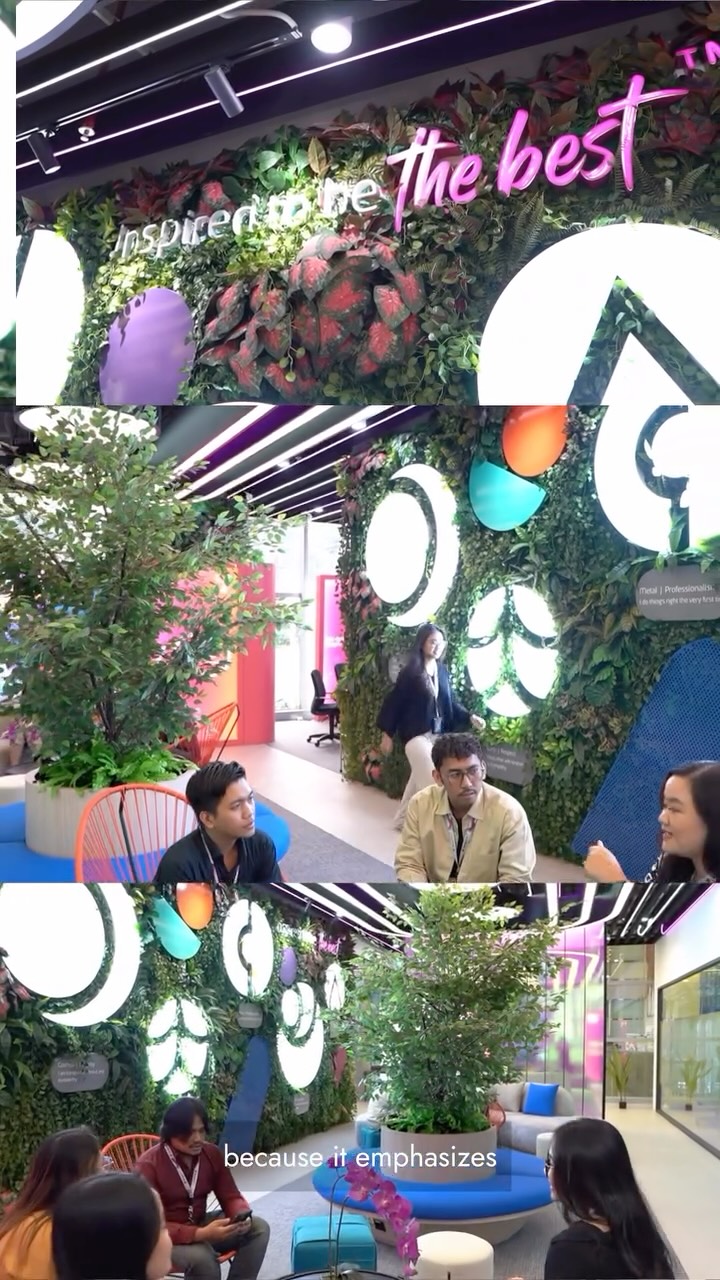
- Living walls: Vertical gardens improving air quality and aesthetics
- Abundant plantings: Throughout spaces, not just in corners
- Natural materials: Wood, stone, and natural fibers creating tactile nature connection
- Water features: Indoor fountains or water walls providing calming sounds
Maximizing Natural Light
Daylight reduces energy consumption while improving occupant wellbeing:
- Open floor plans allowing light penetration
- Glass-walled meeting rooms sharing natural light
- Strategic workstation placement near windows
- Light shelves or reflective surfaces bouncing daylight deeper into spaces
Studies show workers with access to natural light sleep 46 minutes more per night and report 51% less eyestrain.
Outdoor Connections
Where possible, provide:
- Operable windows (if climate and building systems allow)
- Balconies or terraces for break areas
- Views to greenery or landscape
- Seamless indoor-outdoor transitions
Even views of nature images or patterns can provide stress-reduction benefits when actual outdoor access isn't feasible.
Certification Options in Southeast Asia
Green building certifications verify sustainable design claims and provide frameworks guiding implementation.
LEED (Leadership in Energy and Environmental Design)
Globally recognized, particularly for multinational companies seeking consistent standards. Addresses:
- Energy efficiency
- Water conservation
- Material selection
- Indoor environmental quality
- Innovation in design
LEED certification ranges from Certified to Platinum based on point accumulation.
Green Mark (Singapore)
Singapore's Building and Construction Authority administers this increasingly influential regional standard. Particularly relevant for Singapore-based projects but gaining traction across Southeast Asia.
WELL Building Standard
Focuses specifically on human health and wellbeing through:
- Air quality
- Water quality
- Nourishment programs
- Light and circadian rhythm support
- Fitness opportunities
- Comfort (thermal, acoustic, ergonomic)
- Mind (mental health support)
WELL certification increasingly popular among companies prioritizing employee wellness alongside environmental sustainability.
EDGE (Excellence in Design for Greater Efficiencies)
Developed for emerging markets, EDGE offers streamlined certification process appropriate for Southeast Asian context. Focuses on measurable resource savings (energy, water, embodied energy in materials).
Water Conservation
While often overshadowed by energy focus, water efficiency matters in water-stressed regions:
- Low-flow fixtures (faucets, toilets, urinals) reducing consumption by 40-60%
- Sensor-activated faucets preventing waste
- Greywater systems (where feasible) recycling water for toilet flushing or irrigation
- Native landscaping requiring minimal irrigation
Regional Climate Considerations
Southeast Asia's tropical climate creates specific sustainable design opportunities and challenges:
Passive Cooling Strategies
- Cross-ventilation utilizing prevailing breezes
- High ceilings allowing heat stratification
- Solar chimneys creating natural ventilation
- Thermal mass materials absorbing heat during day, releasing at night
Humidity Management
High humidity demands careful material selection (mold-resistant finishes) and proper HVAC design including dehumidification capability.
Solar Protection
Intense tropical sun requires aggressive shading while maintaining views and natural light—a design balancing act requiring expertise.
Conclusion: Sustainability as Competitive Advantage
Sustainable office design represents the convergence of environmental responsibility, employee wellbeing, and business performance. As ESG commitments shift from optional to obligatory, companies integrating sustainability into workspace design gain competitive advantages through reduced operating costs, enhanced talent attraction, improved productivity, and future-ready facilities.
For businesses operating across Southeast Asia, regional sustainability standards and climate-appropriate strategies are essential. One-size-fits-all approaches transplanted from temperate climates often fail in tropical contexts.
The investment in sustainable design delivers returns measured in decades, not quarters. Forward-thinking companies recognize that green buildings aren't about spending more—they're about spending wisely on solutions that benefit people, planet, and profits simultaneously.
Planning ESG-compliant office design in Southeast Asia? AI Associates specializes in sustainable workspace design incorporating biophilic elements, smart technology, and regional climate considerations. Our award-winning projects demonstrate how sustainability and sophistication coexist. Contact us to discuss how sustainable design can elevate your workspace and ESG performance.